

Research Platform
WiMoCSI: Advancing Reliable Wi-Fi Mobility Sensing
Using physics-based simulation, controlled commodity Wi-Fi CSI experiments, and evidence-aware signal processing to investigate walking-speed measurement reliability and future healthy-aging and ADRD research.

WiMoCSI Platform at a Glance
Physics-Based Wi-Fi Simulation
Model human movement and wireless signal propagation in realistic indoor environments.
DemonstratedReal-World Wi-Fi Measurements
Collect Channel State Information (CSI) using commodity Intel AX201 devices during controlled walking experiments.
DemonstratedReliability-Aware Mobility Estimation
Evaluate walking-speed estimates, uncertainty, and when sensing results should be withheld.
Under EvaluationHealthy Aging & ADRD Research
Pursue future in-home mobility monitoring applications for older adults and Alzheimer's disease and related dementias (ADRD) research.
Long-Term Research GoalTwo Complementary Ways to Investigate Human Movement
Simulate Human Movement
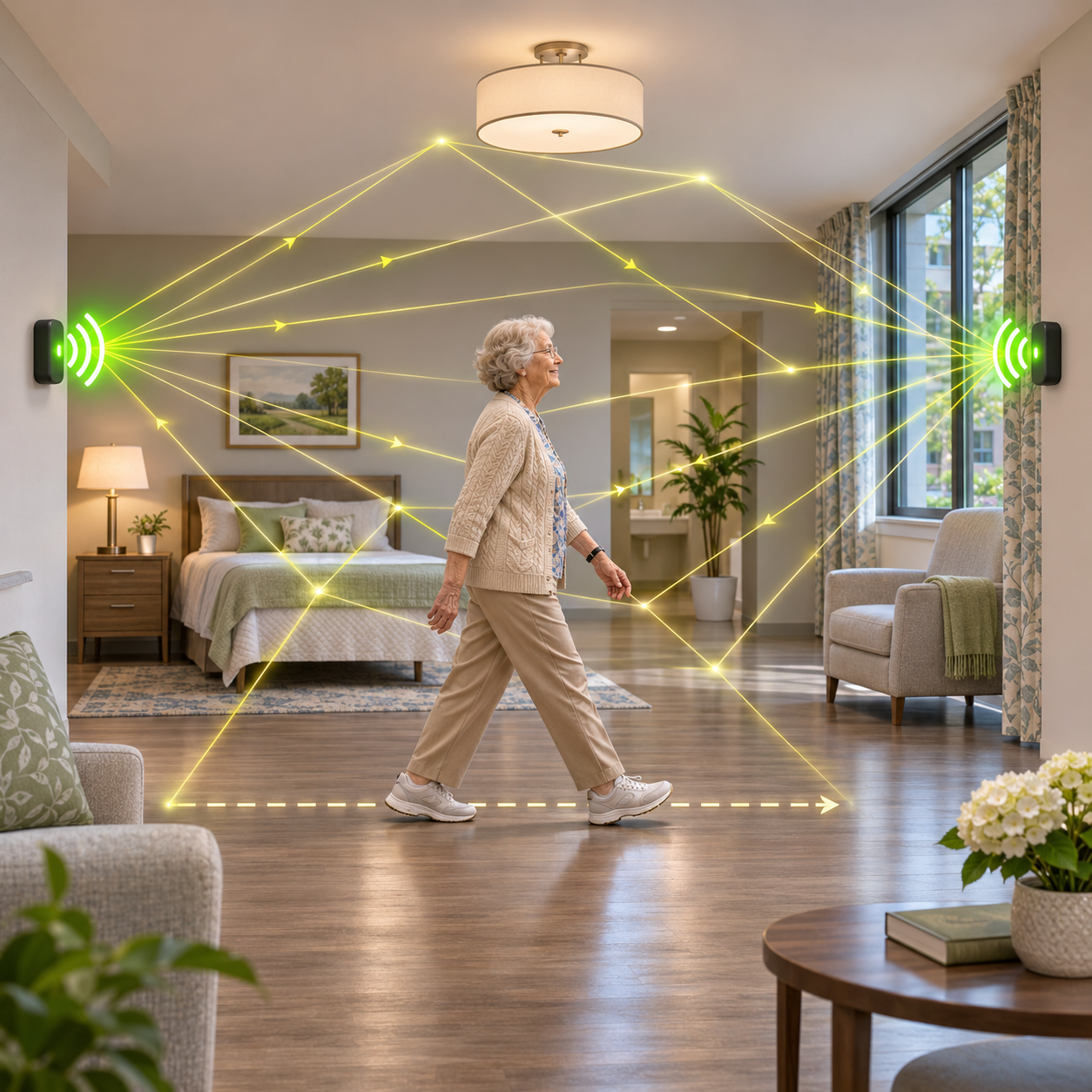
Create controlled virtual walking experiments using physics-based ray tracing. Configure the room, antenna locations, and walking motion to investigate how human movement changes Wi-Fi Channel State Information (CSI) under known conditions.
- Known walking-speed reference
- Reproducible experimental scenarios
- Configurable propagation conditions
Measure Real-World Movement
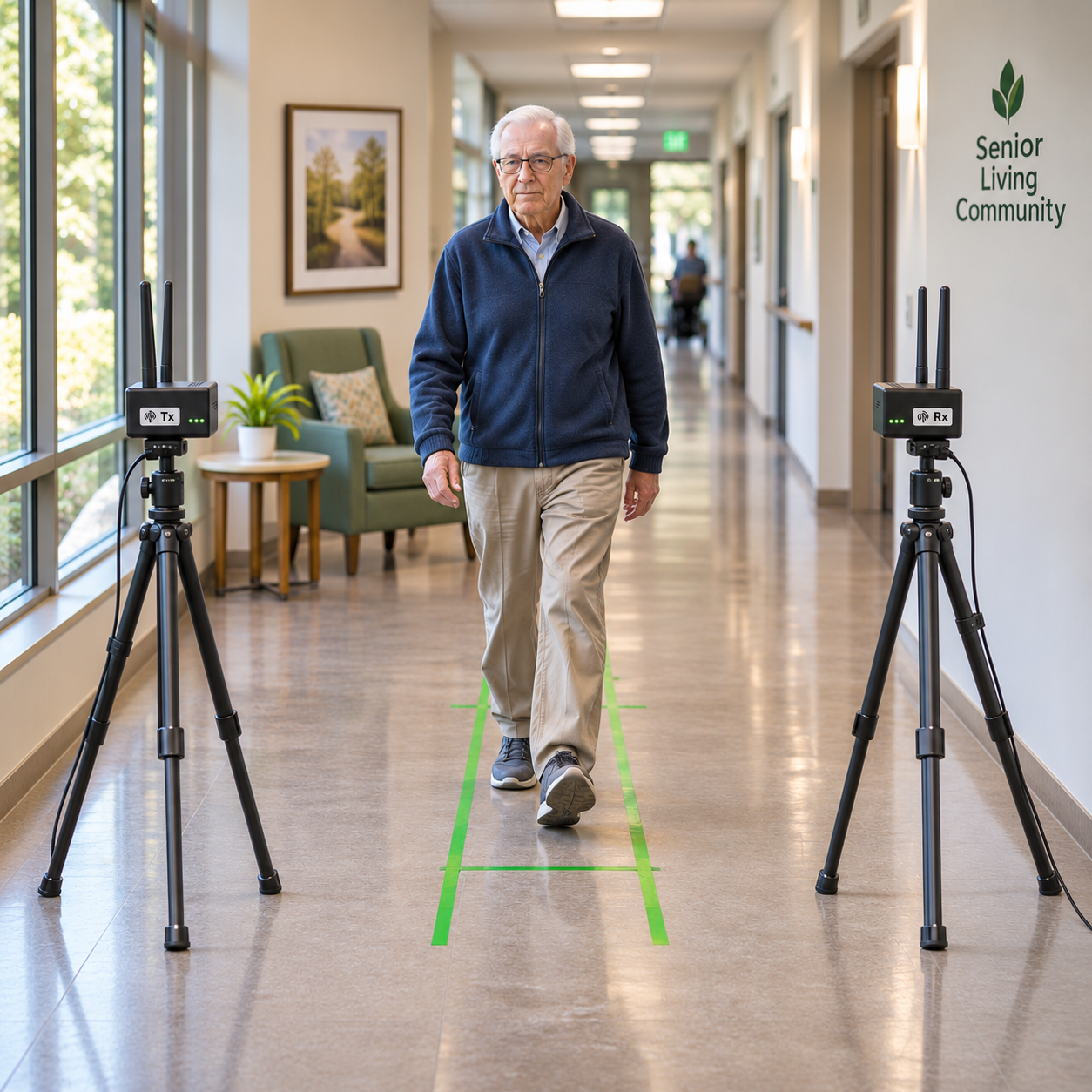
Use commodity Wi-Fi devices to record how wireless signals change during controlled walking trials. Compare CSI-based motion and walking-speed estimates with independently measured walking references to assess accuracy and reliability.
- Intel AX201 CSI measurements
- Controlled walking experiments
- Independent video-based references
From Controlled Modeling to Real-World Evidence
WiMoCSI combines physics-based simulation with real-world Wi-Fi measurements to investigate how human movement affects wireless signals and how reliably those changes can be measured. Controlled simulations allow researchers to study signal behavior under known conditions, while physical walking experiments reveal the opportunities and limitations of commodity Wi-Fi sensing. Together, these complementary approaches strengthen scientific validation, guide the development of more reliable mobility sensing, and support future applications in healthy aging and in-home monitoring.
From Wi-Fi Signals to Reliable Mobility Measurements
A transparent research workflow connecting simulated and measured Wi-Fi signals with motion analysis, reliability checks, and independent validation.
Simulated CSI
Physics-based ray tracing with known human motion.
Measured CSI
Intel AX201 recordings with independent walking references.
Signal Preparation
Align and preprocess Wi-Fi CSI for consistent motion analysis.
Data Quality Assessment
Check packet timing, missing data, and signal suitability.
Motion Feature Extraction
Identify temporal and frequency-domain patterns linked to human movement.
Evidence-Aware Estimation
Estimate walking speed when supported by the data; otherwise withhold the result.
Independent Validation
Compare estimated mobility with reference measurements and quantify errors and failures.
Why Reliability Matters
For future mobility monitoring in older adults and people living with cognitive impairment, knowing when a Wi-Fi measurement cannot be trusted is just as important as obtaining an accurate estimate.
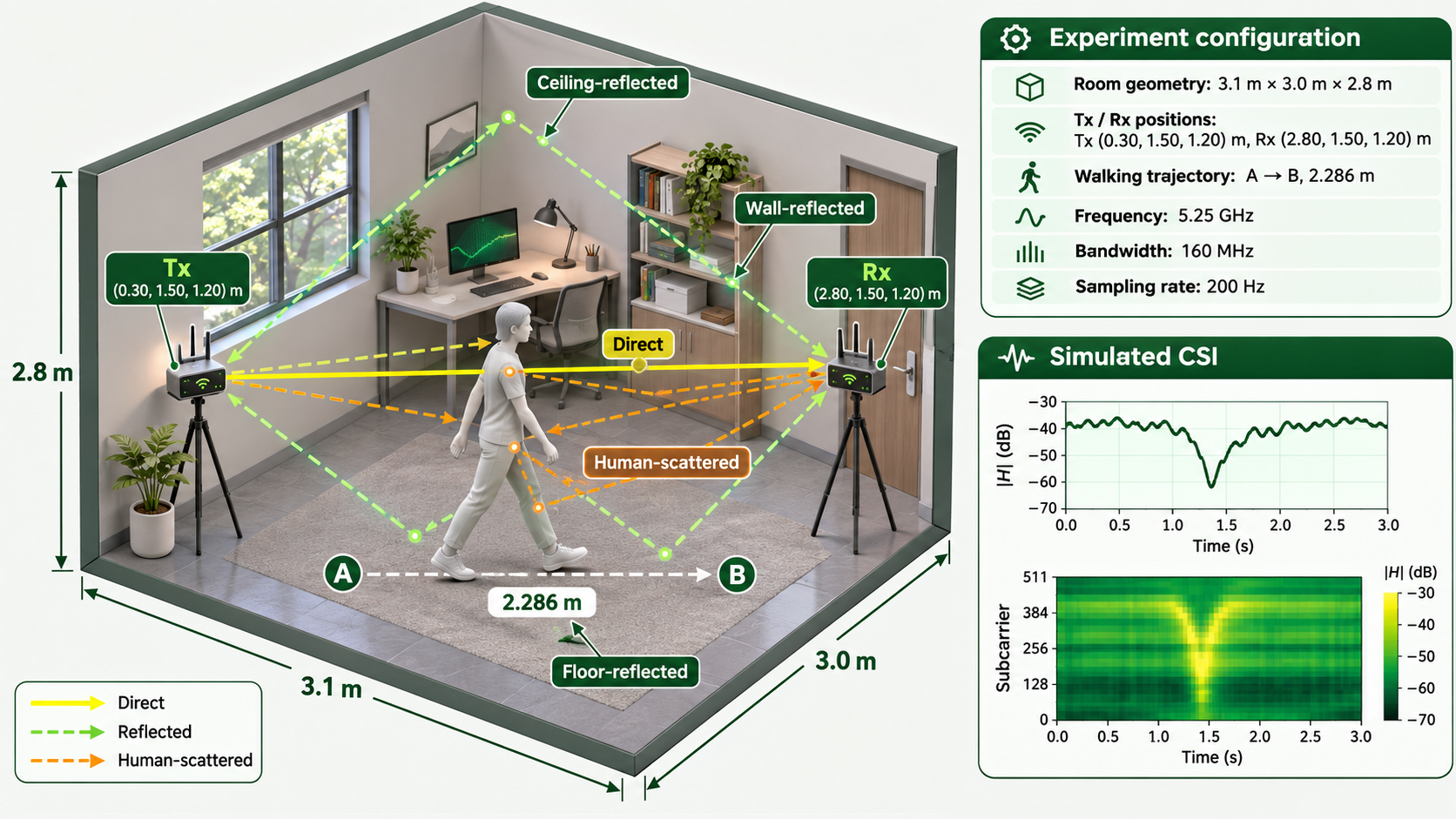
Inside the virtual laboratory
A ray-traced virtual laboratory for indoor CSI generation, where room, radio, and motion conditions can be configured to study how the environment and human motion affect wireless sensing.
- Room geometry and materials
- Transmitter and receiver placement
- Walking trajectories and speed
- Multipath and human-scattering assumptions
- Reproducible simulation configurations
Experimental evidence & results
Ray-Traced Speed Recovery
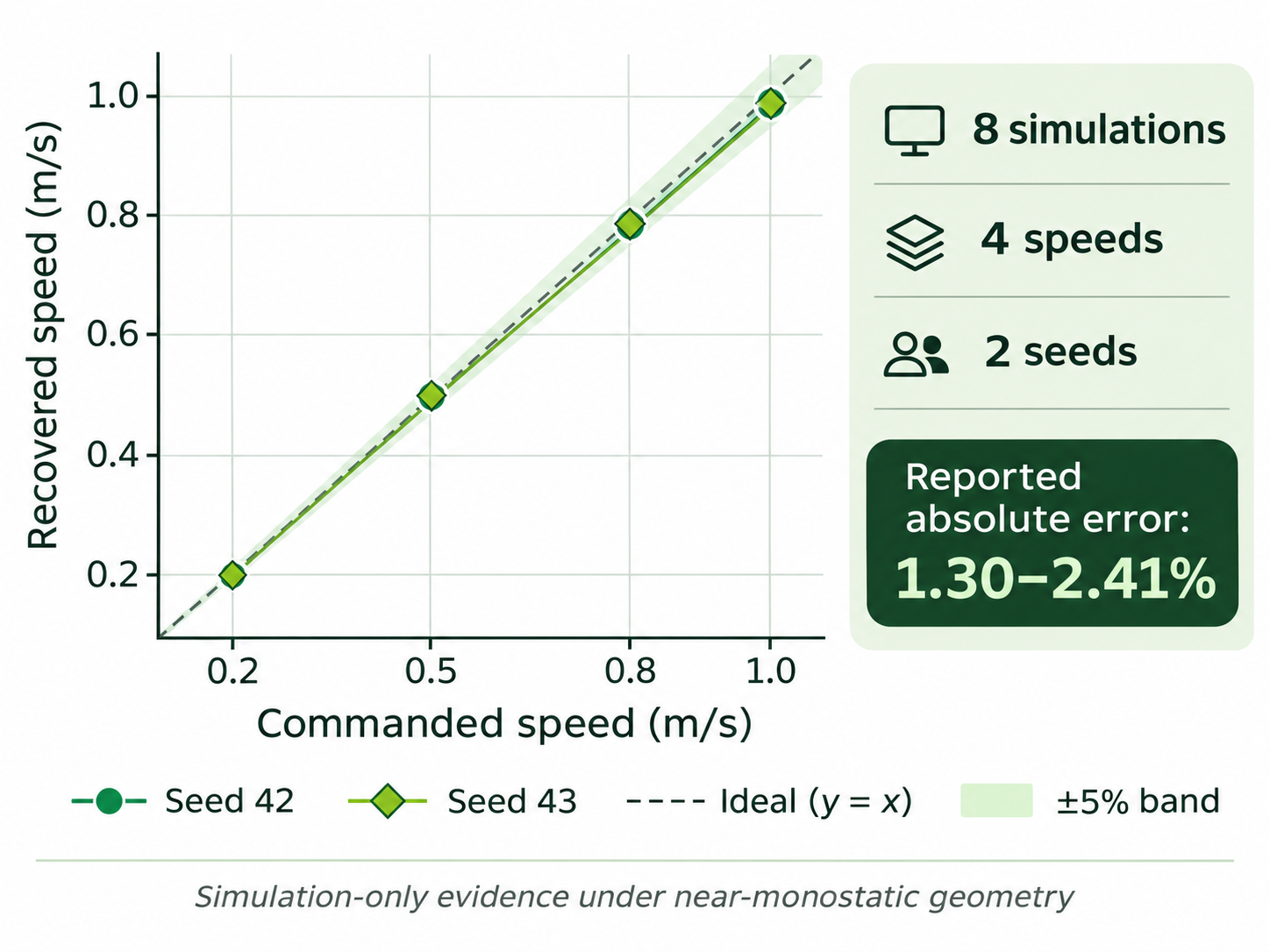
How well walking speed can be recovered from simulated CSI under different propagation assumptions.
Source: WiMoCSI simulation code
AX201 Walking Experiments
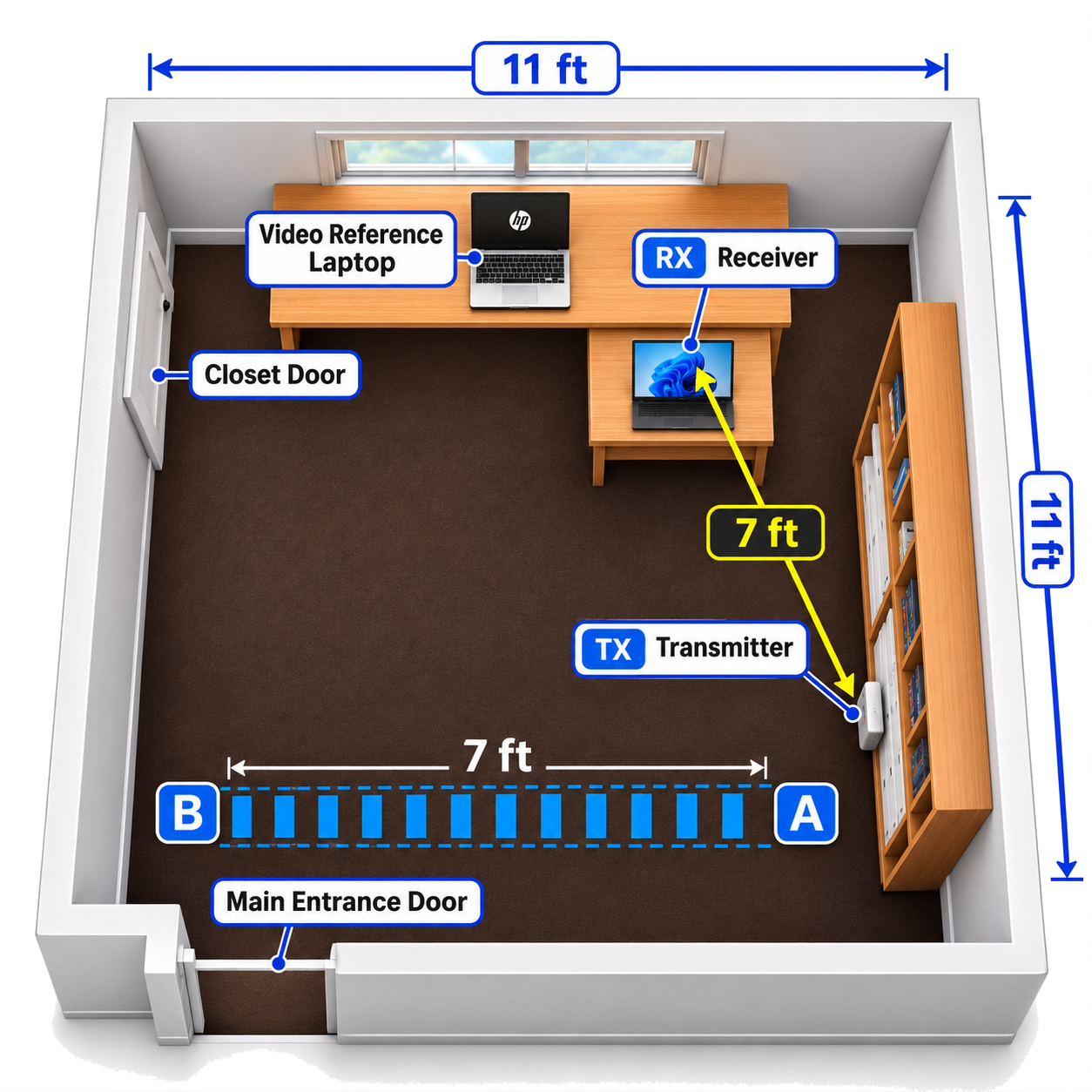
Speed estimates from commodity Wi-Fi CSI recorded during controlled walking trials, compared with independent references.
Source: controlled experimental records
Retrospective Timing Analysis
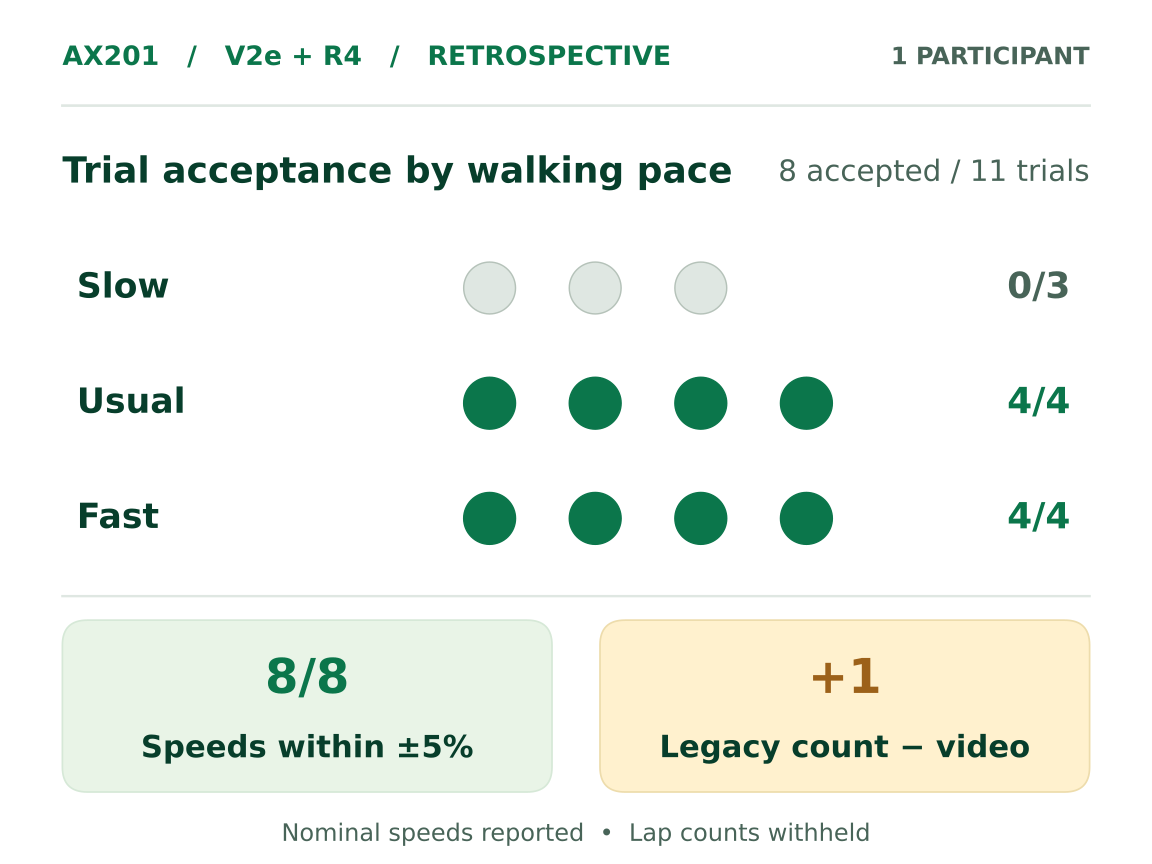
Retrospective lap-timing recovery, including cases where the estimate is withheld because evidence is insufficient.
Source: retrospective evaluation
Figures are generated from WiMoCSI code and experimental records and should be read within their experimental conditions and scope.
Engineering Trustworthy Wi-Fi Mobility Sensing
Understanding measurement uncertainty, recognizing unreliable estimates, and validating Wi-Fi sensing under real-world conditions.
Sources of Measurement Uncertainty
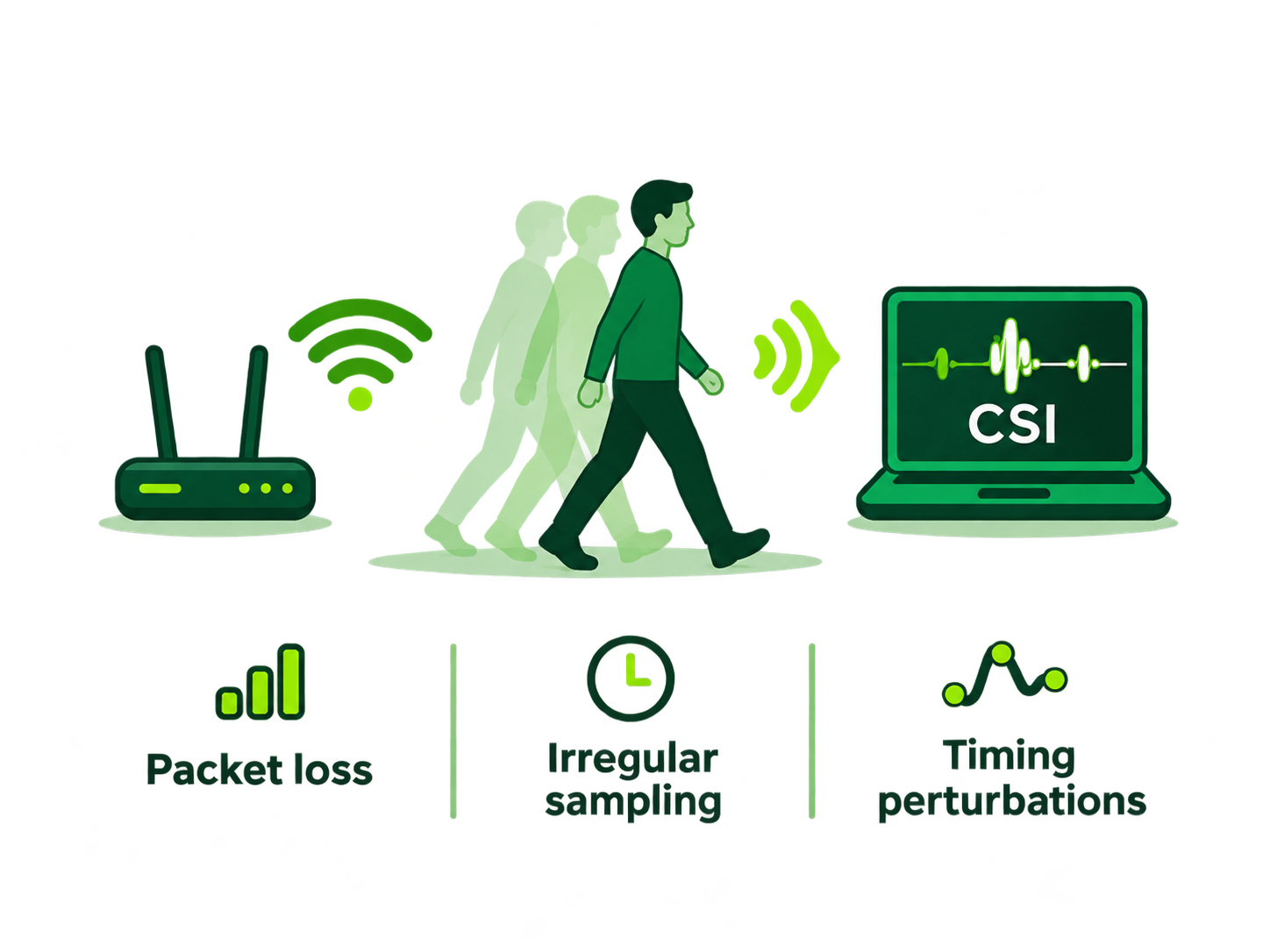
Measurement Challenges
Real-world Wi-Fi measurements are affected by packet loss, irregular sampling, timing variations, and changing signal conditions. WiMoCSI investigates how these factors influence motion detection and walking-speed estimation.
Reliability-Aware Estimation
We investigate signal-quality checks, estimation safeguards, and uncertainty assessment to distinguish potentially useful mobility measurements from cases where the available evidence is insufficient.
Scientific Validation & Next Steps
Current evidence comes from physics-based simulations and controlled Wi-Fi walking experiments. Broader testing across participants, environments, and everyday activities is needed before considering real-world health monitoring applications.
Why Reliability Matters for Healthy Aging
For future monitoring of older adults, including people living with Alzheimer's disease and related dementias (ADRD), inaccurate or missed mobility measurements could lead to misleading interpretations. Understanding when Wi-Fi sensing works, when it fails, and how uncertainty should be reported is essential before these technologies can support healthcare research and everyday care.
Open Research, Reproducibility & Collaboration
Explore the scientific methods, software, publications, and experimental resources behind WiMoCSI.
Source Code & Development
Explore the WiMoCSI software architecture, simulation tools, CSI analysis methods, and ongoing development.
Scientific Publications
Read research on Wi-Fi motion sensing, walking-speed estimation, numerical validation, and measurement reliability.
Experimental Configurations
Review documented simulation scenarios, antenna geometry, walking references, and acquisition settings.
Methods & Reproducibility
Understand the research workflow, validation procedures, quality checks, and known limitations.
Built for Reproducible Research
WiMoCSI aims to make its methods, experimental assumptions, and validation evidence transparent so researchers can evaluate findings and build on the platform.